
What Are Florida Window Tint Laws for Windshields 2026?
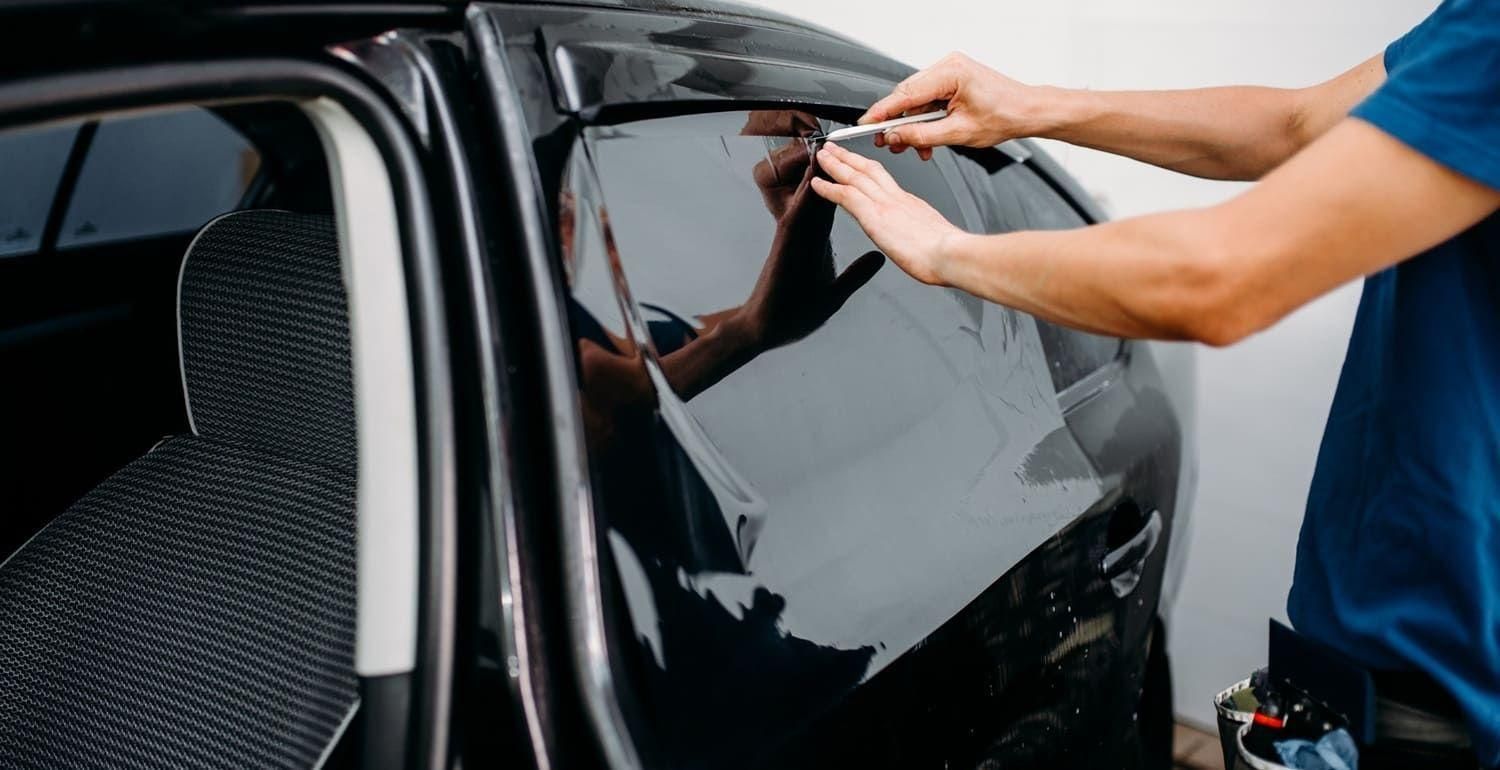
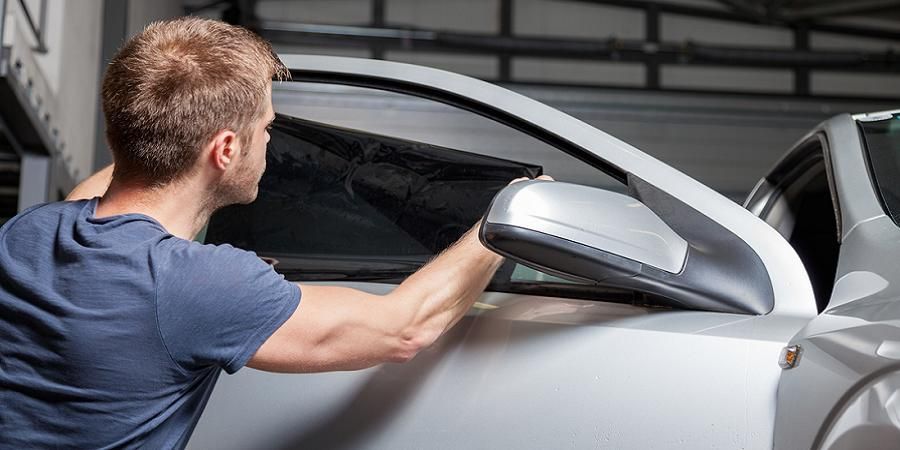
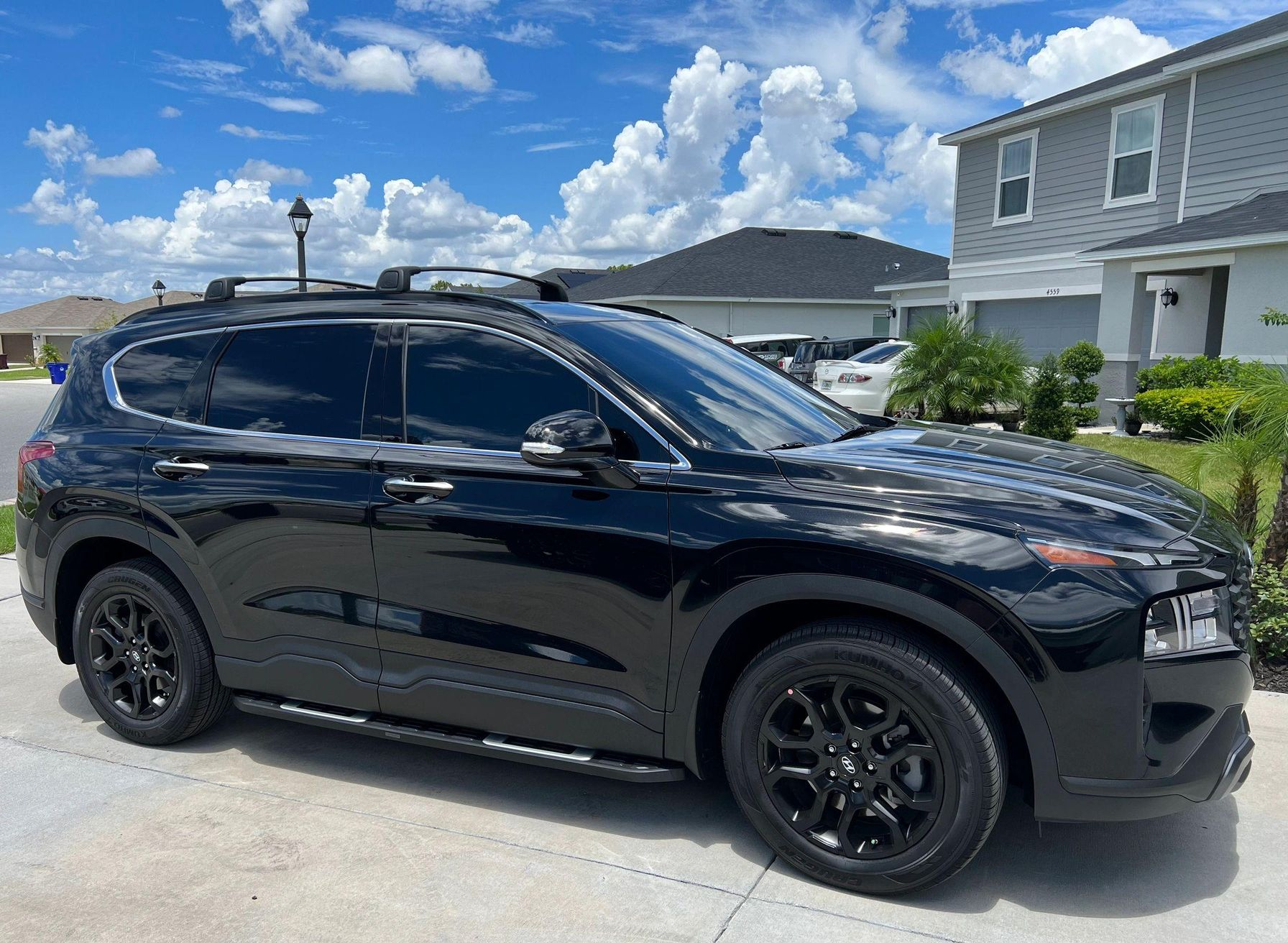
Florida windshield tint laws for 2026 are stricter than many drivers realize. The short answer is that Florida only allows non-reflective tint above the manufacturer's AS-1 line on the windshield. That rule applies statewide, but it is often misunderstood because many drivers mix it up with the different tint percentages allowed on front side, rear side, and back windows. Installing illegal windshield tint can lead to citations, correction orders, inspection problems, and real safety concerns if visibility is reduced in rain, glare, or low light. For drivers in Cape Coral, Lee County, and the rest of Southwest Florida, professionally installed legal tint can still be a smart upgrade. The key is matching the tint to the vehicle, confirming the AS-1 line location, and making sure the installer understands Florida compliance. When the film is selected and installed correctly, drivers can still improve comfort and UV protection without creating avoidable legal problems or windshield tint ticket risks.

Table of Contents
1. Florida Windshield Tint Law: What the AS-1 Line Rule Actually Means
2. Windshield Tint Rules for Sedans vs. SUVs and Vans
3. Windshield Tint Darkness and Reflection Limits Explained
4. What Happens If Your Windshield Tint Is Illegal in Florida
5. Medical Exemptions for Windshield Tint in Florida
6. How Windshield Tint Laws Differ from Side and Rear Window Tint Laws
7. How to Make Sure Your Windshield Tint Is Installed Legally
8. FAQ: Florida Windshield Tint Questions
9. Conclusion and Next Step
Florida Windshield Tint Law: What the AS-1 Line Rule Actually Means
The best direct answer to the Florida windshield tint law question is this: windshield tint is legal only in a narrow band above the manufacturer's AS-1 line, and that tint must be non-reflective. For standard passenger vehicles, full windshield tint below that line is not the normal legal option.
What the AS-1 line is
The AS-1 line is a manufacturer marking near the top of the windshield. On many vehicles it appears near the upper corners, though exact placement varies. It marks the lowest point where a legal sun strip can usually begin. If film is installed lower than that, the windshield can become noncompliant even if the tint does not look extremely dark.
Why Florida uses the AS-1 rule
The rule exists to protect visibility while still allowing glare reduction at the top of the windshield. In bright Florida conditions, especially around Cape Coral and Fort Myers, a legal upper strip can help with sun exposure without obstructing the main road view.
What is commonly misunderstood
Many drivers think the windshield follows the same type of percentage rule as side windows. It does not work that way in most ordinary installations. The windshield rule is primarily about placement above the AS-1 line and non-reflective material. That is why a legal tint strip near the top may be allowed, while a much lighter full windshield application may still violate the law.
Windshield Tint Rules for Sedans vs. SUVs and Vans
For windshields, the basic Florida rule is generally the same for sedans, SUVs, and vans: non-reflective tint above the AS-1 line only. The bigger differences by vehicle type appear in the side and rear window limits, which is why drivers often become confused.
Same windshield rule
If you drive a sedan, SUV, or van in Southwest Florida, the windshield law still centers on the AS-1 line. Vehicle type does not normally create a broader full-windshield tint allowance for standard use.
Different side and rear rules
Where vehicle type matters is on the rest of the glass. Sedans and SUVs or vans can have different legal tint percentages on rear side windows and the back window. That difference often causes drivers to assume the windshield rules change too, but the windshield placement rule stays far more limited.
Sedan vs. SUV and van tint law comparison
| Vehicle type | Windshield | Front side windows | Rear side windows | Back window |
|---|---|---|---|---|
| Sedan | Non-reflective tint above the AS-1 line only | 28% VLT | 15% VLT | 15% VLT |
| SUV or Van | Non-reflective tint above the AS-1 line only | 28% VLT | 6% VLT | 6% VLT |
This is why a complete tint quote should consider the whole vehicle. A legal rear setup on an SUV may not be legal on a sedan, even though both vehicles still follow the same windshield AS-1 rule.
Windshield Tint Darkness (VLT) and Reflection Limits Explained
When people search for legal tint percentage Florida, they usually want one easy number. For the windshield, the law is not best understood as a full-glass percentage allowance. Instead, it is best understood as a placement rule with a non-reflective requirement.
What VLT means
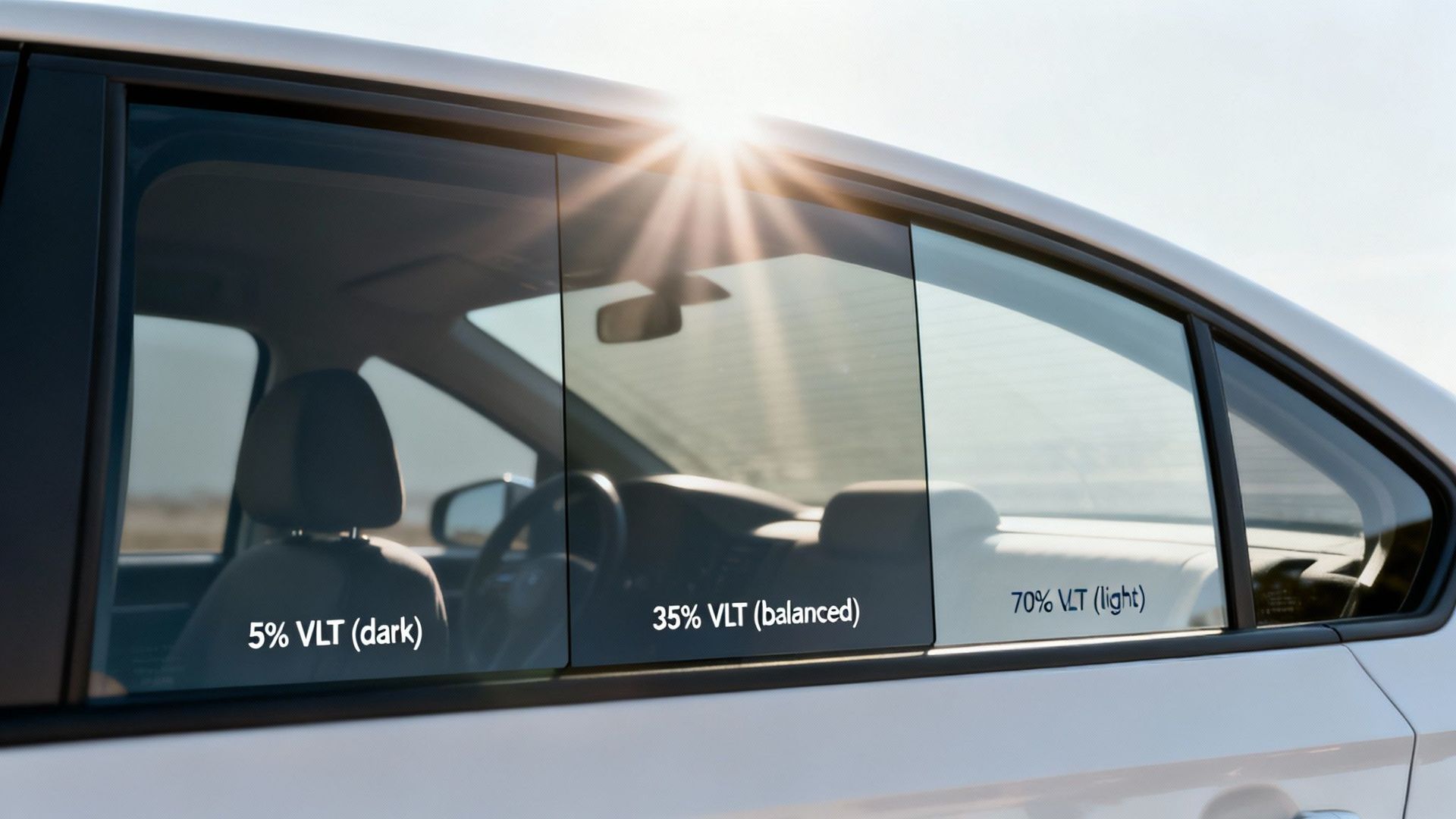
VLT stands for visible light transmission. A lower VLT percentage means a darker film because it allows less light through. That number matters a lot on side and rear windows, where Florida gives more clearly defined percentage limits.
Windshield darkness in plain English
For standard legal use, Florida does not generally permit a full dark windshield film. A compliant windshield tint installation is usually a non-reflective strip above the AS-1 line. That is why asking “how dark can windshield tint be in Florida” can be misleading if the film extends below the legal boundary.
Reflection limits matter too
Florida also limits reflectivity on tinted windows. A mirror-like film can create compliance problems even if the tint strip is near the top. On side windows, the reflectivity limit is commonly discussed as no more than 25 percent reflective. The safest approach is to use a premium non-reflective automotive film that is designed for legal use.
Florida tint law comparison table
| Window area | Legal VLT percentage | Allowed reflection percentage | Placement restrictions | Enforcement frequency | Common violations | Inspection and registration impact | Available exemptions |
|---|---|---|---|---|---|---|---|
| Windshield Tint | No ordinary full-windshield VLT allowance for standard use. Tint is generally limited to a strip above the AS-1 line | Non-reflective only | Must remain above the AS-1 line | Often noticed during traffic stops because placement is visible | Tint below AS-1 line, reflective film, full windshield coverage | Can lead to citation and correction requirements | Possible medical exemption |
| Front Side Window Tint | 28% VLT | Up to 25% reflective | Applies to the full front side window area | Frequently checked with visual review or tint meter use | Too dark, too reflective, noncompliant film over factory glass | Can create citation or proof-of-correction issues | Possible medical exemption |
| Rear and Back Side Window Tint | Sedan: 15% VLT rear side and back. SUV/Van: 6% VLT rear side and back | Up to 25% reflective | No AS-1 line issue, but VLT and reflectivity still apply | Less frequent than front glass enforcement, but still enforceable | Wrong percentage for vehicle class, excessive reflectivity | May become an issue if cited or reviewed for compliance | Possible medical exemption |
What Happens If Your Windshield Tint Is Illegal in Florida
If your windshield tint is illegal in Florida, the most likely outcome is a citation or correction-related traffic stop. Officers can easily notice film that extends below the AS-1 line because the violation is visible from outside the vehicle.
Common penalties
A windshield tint ticket Florida drivers receive may involve a fine, an order to remove the tint, or proof that the issue has been corrected. The exact dollar amount can vary by jurisdiction and case details, so drivers should treat noncompliant tint as a preventable cost rather than a minor gamble.
Inspection and paperwork impact
Illegal tint can also create compliance headaches if a vehicle is reviewed for equipment issues. Even when the initial penalty seems small, removal, reinstallation, and lost time can make the real cost much higher.
Safety is part of the reason
Florida enforces windshield laws because front visibility matters. Heavy or low-placed film can reduce a driver's ability to see road hazards, pedestrians, lane markings, and weather conditions. In a region with glare, storms, and fast-changing light, legal placement helps protect both the driver and everyone else on the road.

Medical Exemptions for Windshield Tint in Florida
Florida does allow medical exemptions for certain tint situations, but drivers should not assume that a medical need automatically allows any film on any part of the windshield.
How the exemption process generally works
A person with a qualifying medical condition usually needs supporting medical documentation and must follow the proper state process. The exemption should be documented before installation decisions are made.
Why professional guidance matters
Even with an exemption, the installed film still needs to match what is legally permitted under that approval. This is one reason experienced tint shops ask questions about paperwork before recommending a darker or broader windshield application.
Do exemptions apply to every vehicle the same way?
Exemptions are tied to legal approval, not to assumptions. Drivers should keep all relevant documentation with them and verify exactly what is allowed so they do not rely on incorrect verbal advice or online rumors.
How Windshield Tint Laws Differ from Side and Rear Window Tint Laws
The easiest way to understand Florida window tint laws 2026 is to separate windshield rules from side and rear rules. The windshield is mostly a placement issue. Side and rear windows are more percentage-driven.
Windshield law is mostly about location
If tint goes below the AS-1 line, it can become illegal regardless of whether the film appears lightly shaded. That is very different from side windows, where the VLT percentage is usually the first question.
Front side windows follow a percentage rule
Florida front side windows are commonly limited to 28 percent VLT, and law enforcement may use tint meters to confirm whether the installed film meets that standard.
Rear windows depend on vehicle type
Sedans generally have a 15 percent VLT rule on the rear side windows and back window, while SUVs and vans can generally go darker at 6 percent VLT. Those differences are a major reason vehicle owners should not copy another car's tint setup without checking their own legal category.
Why this matters to Cape Coral drivers
Many people requesting window tinting Cape Coral FL services want the entire vehicle to look consistent. A professional installer should explain that a consistent look still has to respect different legal limits on different pieces of glass.
How to Make Sure Your Windshield Tint Is Installed Legally
The best way to stay compliant is to verify the law before installation and use a shop that understands vehicle-specific Florida tint limits.
Check the AS-1 line before any film is cut
The installer should identify the manufacturer's AS-1 line and explain exactly where the legal strip will sit. If a shop cannot clearly explain this part, that is a warning sign.
Choose compliant film, not just dark film
Tints & Beyond installs LLumar window film products, which fit naturally into a compliance-focused approach for Florida drivers who want premium heat and UV performance, long-term clarity, and professional results without risking obvious windshield violations.
Review the full vehicle package
A quality installer should review the windshield, front side windows, and rear glass together. That matters because a legal setup for one vehicle type may not be legal for another.
Ask for clarity before you approve the job
Drivers should ask what film is being installed, where it will sit on the windshield, whether it is non-reflective, and how the rest of the vehicle complies with Florida law. Those questions help prevent costly mistakes later.
FAQ: Florida Windshield Tint Questions
Can you legally tint the windshield in Florida?
Yes. Florida generally allows non-reflective tint above the manufacturer's AS-1 line.
What is the AS-1 line on a windshield?
It is the manufacturer-marked boundary near the top of the windshield that indicates where legal tint placement can begin.
How dark can windshield tint be in Florida?
For standard use, the bigger legal issue is placement, not a full-windshield darkness percentage. Tint is generally limited to a non-reflective strip above the AS-1 line.
Is reflective windshield tint legal in Florida?
Reflective windshield tint is generally not allowed for standard legal installations.
What is the fine for illegal windshield tint in Florida?
The amount can vary, but penalties may include a citation, fine, and order to remove or correct the tint.
Do Florida windshield tint laws differ for SUVs and vans?
The windshield AS-1 line rule is generally the same, but side and rear window tint percentages differ by vehicle type.
Can I get a medical exemption for darker windshield tint in Florida?
Possibly, if you have a qualifying condition and complete the proper state documentation process.
Will illegal windshield tint cause a failed vehicle inspection?
It can create compliance issues, citations, and correction requirements if the tint is clearly outside legal placement rules.
Does Florida law enforcement use tint meters to check windshields?
They may use tint meters, especially on side windows, but windshield violations often begin with visible placement or reflectivity concerns.
How do I know if my windshield tint installer followed Florida law?
Ask whether the installer verified the AS-1 line, used non-reflective film, and checked the full vehicle for Florida compliance.
Conclusion and Next Step
Florida windshield tint laws for 2026 are built around legal placement and non-reflective film. For most drivers, that means a windshield tint strip is only allowed above the AS-1 line, while side and rear windows follow separate VLT and reflectivity rules that depend on vehicle type. Understanding those distinctions is the best way to avoid citations, rework, and unnecessary confusion.
For drivers in Cape Coral, FL and throughout Lee County, professionally installed legal tint can still provide meaningful glare, heat, and UV protection without creating legal risk. Tints & Beyond installs LLumar window film products for drivers who want compliant installation, premium performance, and long-term clarity. If you want a free estimate and legal windshield tint installation using LLumar products, contact Tints & Beyond today.