Stop Guessing Your Tint: Florida’s IRX vs. CTX Showdown
Picking the right tint in Florida is not just about looks; it is about staying cooler, seeing clearly, and staying legal. If you drive around Cape Coral, you feel the sun on your arms, the glare off the hood, and that hot steering wheel after a quick store run. The right ceramic tint can take the edge off all of that in a big way.
Many drivers hear about Llumar IRX and CTX and wonder which one is worth it for real Florida use. Both are quality ceramic films, but they are not the same. The trick is to think about tint like a trim package on a car. Sedan or SUV, front or rear glass, and legal shade limits all change how the choice between IRX and CTX plays out.
At our auto spa in Cape Coral, we work with these films every day on local cars, trucks, and SUVs. We see how they handle slow traffic on Pine Island Road, long I‑75 runs, and daily parking in open lots. That real-world experience is what we want to share here, so you can stop guessing and start planning the right setup for your vehicle.
Florida Heat, Glare, and Law: What Really Matters Before You Tint
Florida sun is strong, and the humidity makes the heat feel like it sticks to you. Inside your car, that means hot seats, hot air, and AC that never seems to rest. This is where two tint terms start to matter more than anything: Total Solar Energy Rejected (TSER) and infrared rejection.
- TSER is about how much overall solar energy the film keeps out.
- Infrared rejection focuses on the part of the sun that feels like deep heat on your skin.
- Both help you feel cooler faster once you start driving.
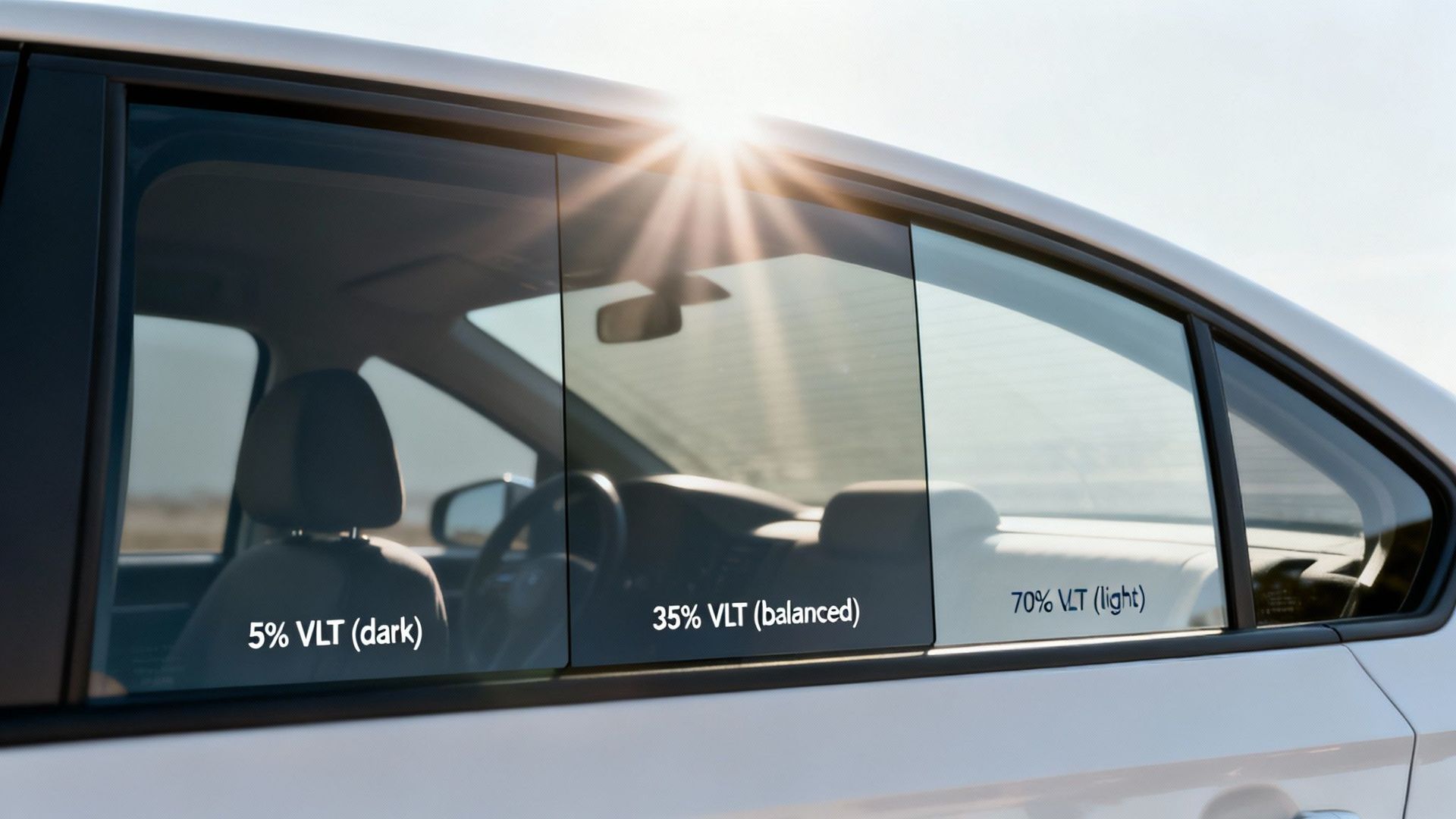
Darker does not always mean cooler if the film is lower quality. Good ceramic films, like IRX and CTX, are made to reject heat even at lighter shades. That is a big deal if you want to stay legal on your front windows but still get real relief from heat and glare.
Florida tint law sets different legal limits for sedans and SUVs. In simple terms:
- Front side windows must stay fairly light so law enforcement can see in.
- Rear sides and back glass can usually be darker, especially on SUVs.
- A top strip across the windshield is allowed, but the main viewing area must stay clear.
On top of the law, safety and comfort matter. You want:
- Enough glare control to handle stormy afternoon skies and bright breaks in the clouds.
- Strong UV protection to help protect skin and slow down fading on seats and dashboards.
- Good night visibility so backing out of driveways or parking lots still feels comfortable.
Getting those pieces right is more important than just saying “as dark as possible.”
IRX vs CTX Performance: Side-by-Side for Real Driving
Both Llumar CTX and Llumar IRX are ceramic films, so they already start ahead of basic dyed tint. They cut glare, reject heat better than standard films, and block almost all UV. Where they start to separate is in how much infrared heat they handle and how that feels in real Florida sun.
CTX is a strong ceramic line that gives:
- Solid heat rejection that feels like a big step up from regular tint
- Good glare control for daily driving and short trips
- A nice balance of performance and value
IRX steps things up in the infrared range. On the road, that usually feels like:
- Cooler seats and center console after parking
- Less “baking” feeling on your arms and legs during longer drives
- A cabin that cools down faster when the AC kicks on
On a wide-open I‑75 run, IRX can feel like you turned down the sun a notch. In stop-and-go traffic, where the sun beats on one side of the car, that extra infrared control really shows. If you park outside most of the time, or you are in your car for long stretches, the upgrade to IRX can feel more noticeable. If most of your trips are short and you have shaded parking, CTX often feels like the sweet spot.
Trim-by-Trim Calculator: Sedans vs SUVs in the Real-World
Now let us talk about how this plays out trim by trim.
For a typical sedan, the “calculator” in your head might look like this:
- Front doors:
Legal shade in either CTX or IRX. Here, IRX gives more heat rejection without going darker.
- Rear doors and back glass:
You can usually pick a darker shade for more privacy and glare control.
- Windshield strip:
A ceramic strip across the top to cut glare from overhead sun.
If you pick CTX all around, you get strong overall comfort and a clean, even look. If you switch just the front doors or the whole car to IRX, you step up the heat rejection on the largest glass surfaces you look through all the time.
SUVs bring a different set of math. They have more glass and often carry kids, pets, or extra gear in the back. For many families, the questions look like this:
- Do we want maximum comfort in the second and third rows, where kids sit closer to the glass?
- Is privacy in the cargo area a must for bags, strollers, or tools?
- How bright do we want the front for night driving while keeping the rear cooler?
With SUVs, it is common to:
- Keep the front doors at a legal, lighter shade in CTX or IRX.
- Go darker on the rear and cargo glass for privacy and extra glare control.
- Choose IRX on the rear if you want to really cut down on back-seat heat.
Mixing shades, like lighter fronts and slightly darker rears, can make the cabin feel cooler than you might expect, especially with ceramic films. When you choose IRX instead of CTX in key spots, you are not just making it darker; you are stacking more infrared rejection on the glass that gets the most sun.
Breaking Down Llumar Ceramic Tint Price in Cape Coral
When people ask about Llumar ceramic tint price, they often want one simple number. In a pro shop, it does not work that way, because several pieces go into the final quote.
The main things that affect price are:
- Film line:
CTX vs IRX
- Vehicle type:
sedan, coupe, SUV, or truck
- How many windows:
just the front doors, full vehicle, or full vehicle plus windshield work
- Add-ons:
a tinted windshield strip or a clear ceramic film on the whole windshield for heat without a dark look
CTX usually lands as the more budget-friendly ceramic option that still brings real heat and glare control. IRX, as the higher-performing ceramic line, costs more but gives you a bump in comfort, especially on long drives and in open parking.
When you think about price, it helps to look at long-term value:
- Less strain on your AC, which can help reduce wear on the system.
- Slower fading of seats, dash, and trim, so your interior stays looking newer.
- A cleaner, finished look that many buyers like when it is time to sell or trade.
Over several Florida summers, the extra comfort from better infrared control can feel like money well spent, especially if you are in the car every day.
How to Pick Your Perfect Setup in One Shop Visit
The easiest way to stop guessing is to treat tint like a custom fit instead of a quick add-on. When we help drivers pick between CTX and IRX, we follow a simple path.
First, we define your main pain points:
- Is heat your biggest problem, or is it glare and eye strain?
- Do you want more privacy in the back seats or cargo area?
- Do you have a firm budget, or are you open if the comfort difference feels big enough?
Next, we look at your vehicle and your routine. Sedans and SUVs follow different legal limits on front and rear glass, and your daily drive, where you park, and who rides with you all matter. Someone who commutes in heavy sun with kids in the back may choose a different setup than someone who only drives a few miles a day and parks in a garage.
Finally, we compare IRX and CTX on real glass samples, so you can see and feel the difference. When you stand by your vehicle and look through each shade in real light, choices get a lot easier. At Tints and Beyond, we build your trim-by-trim quote around what actually fits your sedan or SUV and what you want your fall and holiday driving to feel like, not just what looks good on paper.
Upgrade Your Comfort And Clarity With Premium Ceramic Tint
If you are comparing options and want straightforward details on
LLumar ceramic tint price, we are ready to walk you through your choices and help you find the best fit for your vehicle. At Tints and Beyond, we focus on real performance benefits like heat rejection, glare reduction, and long-term durability so you get value that lasts. Reach out to our team with your questions or to schedule an appointment through our
contact page, and we will help you plan the next steps.