Beat Florida Heat Before You Turn the Key
Ceramic window tint can make your daily Florida commute feel a lot less brutal. When the sun hits your car in a parking lot or while you sit in bridge traffic, the cabin heats up fast. A smart tint setup helps cut that heat, reduce glare, and protect your interior, all while staying legal.
Ceramic window tint is not the same as basic dyed film. It is made with tiny ceramic particles that are great at blocking infrared heat and UV rays without needing to be super dark. That means you can feel cooler without turning your car into a blacked-out cave.
Here in Southwest Florida, late spring is when many drivers notice the sun getting harsher on the way to work and school. This is a perfect time to think about IR rejection, visible light transmission (VLT), and how those numbers affect real cabin temperature. At Tints and Beyond in
Cape Coral, we work every day with commuters who want to stay cool and still follow Florida tint laws.
Why Your Cabin Gets So Hot in Florida Traffic
Your car turns into an oven because of a simple greenhouse effect. Sunlight passes through the glass, hits your seats, dash, and door panels, then those surfaces heat up and send that energy back into the cabin as heat. With the windows closed and the AC fighting hard, the heat keeps building.
It helps to break sunlight into three parts:
- UV: This is what causes sunburn and a lot of interior fading.
- Visible light: This is what your eyes see and what tint shade affects. VLT rules are based on this part.
- Infrared (IR): This is the part you feel as heat on your skin when the sun hits you.
IR is a big reason your car feels so hot when you sit in stop-and-go traffic on the bridge, wait through a long school pickup line, or park on the top level of a garage. Even if your glass already has some UV protection, much of that IR energy still blasts right in.
Factory glass and cheap dyed tint mainly cut glare and some UV. They do not do much to block IR, so you may notice that the car looks darker but does not feel much cooler. That is why your legs still bake and your steering wheel still feels too hot to hold.
IR Rejection Vs. VLT: What Actually Cools Your Car
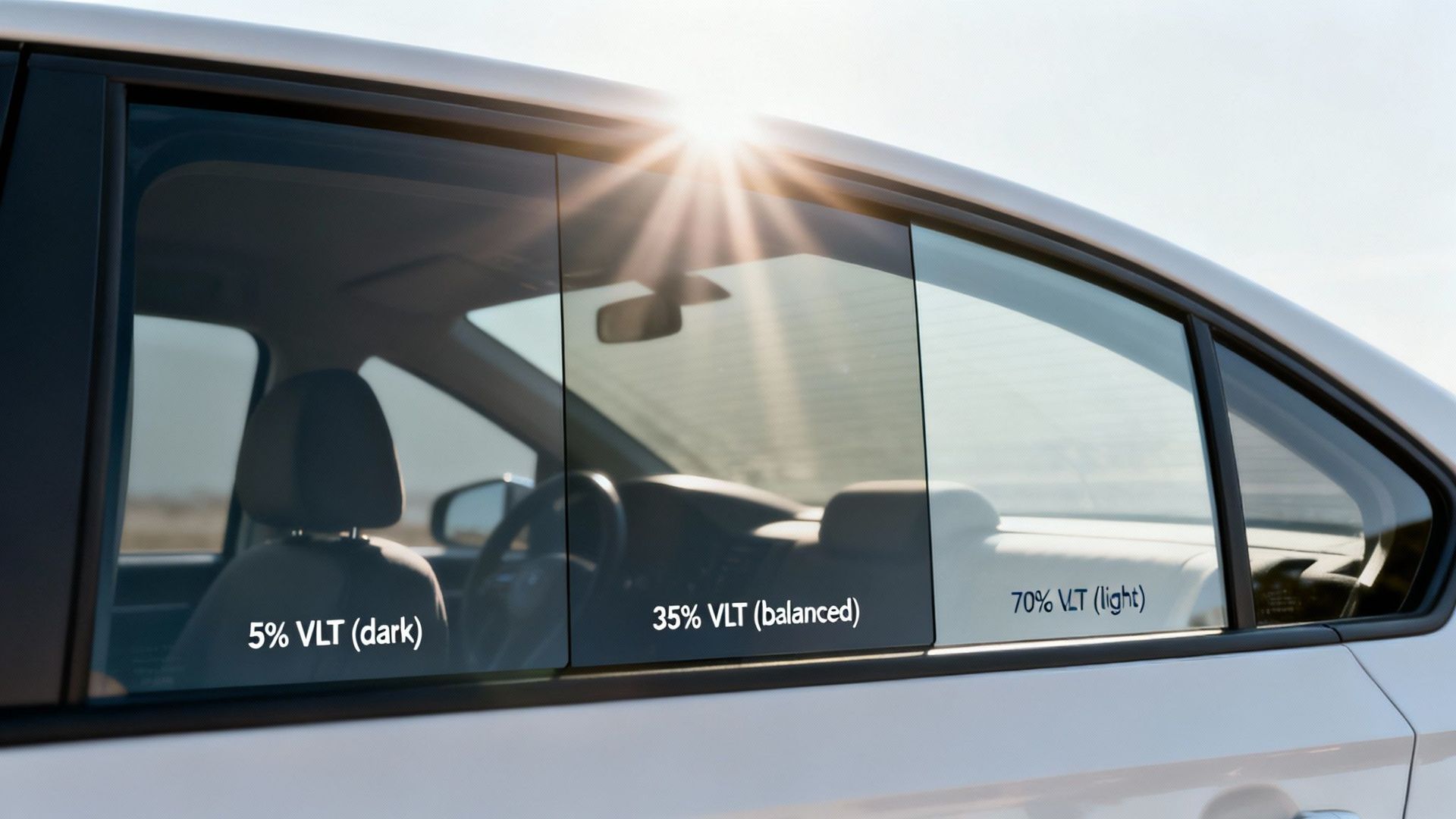
Visible Light Transmission, or VLT, is the percentage of visible light that gets through the glass. A lower VLT number means a darker tint that lets in less visible light. Florida law is based on VLT, not on how much heat the tint blocks.
IR rejection and Total Solar Energy Rejected (TSER) are the terms that tell you how a film handles heat. IR rejection focuses on the infrared part of the spectrum, while TSER looks at the overall energy from the sun that is blocked.
For a Florida commuter, this is what that means in real life:
- A quality ceramic film with high IR rejection can drop cabin temperatures significantly compared to bare glass in direct sun.
- The difference is noticeable when you first open the door, when your AC kicks on, and during longer drives in traffic.
- That cooler cabin can also help your AC run less, which is helpful for both gas and electric vehicles.
Here is the key idea: a light, legal ceramic film can often feel cooler than a much darker cheap film at the same VLT rating. Two films may both be labeled with a similar VLT, but the one with higher IR rejection and TSER will handle heat far better.
So chasing the darkest shade possible is not always the best plan. Very dark non-ceramic films can still let in a lot of heat, and they can hurt your visibility at night or in heavy rain. Ceramic films focus on blocking IR, so you get comfort without having to go super dark.
Staying Legal in Florida Without Sacrificing Comfort
Florida has specific legal limits for window tint VLT, and those rules are different for cars versus SUVs and trucks. While the exact numbers can change, the basic pattern is:
- Front side windows must stay lighter, so law enforcement and drivers have clear visibility.
- Rear side and rear windows are usually allowed to be darker than the fronts.
- A narrow strip at the top of the windshield is often allowed, but full windshield tint is restricted.
A few common misconceptions cause problems:
- Factory privacy glass on many SUVs only affects the rear glass. It looks dark but still passes a lot of IR. Adding film on top of it changes the total VLT and still has to meet the law.
- The legal limit is based on the combined glass and film, not just the film rating on the box.
- Two cars with the same film can meter differently if their factory glass is different.
For commuters, the goal is to match legal VLT with strong ceramic performance. A typical setup might look like:
- Legal VLT ceramic on the front side windows with high IR rejection for comfort and clear visibility.
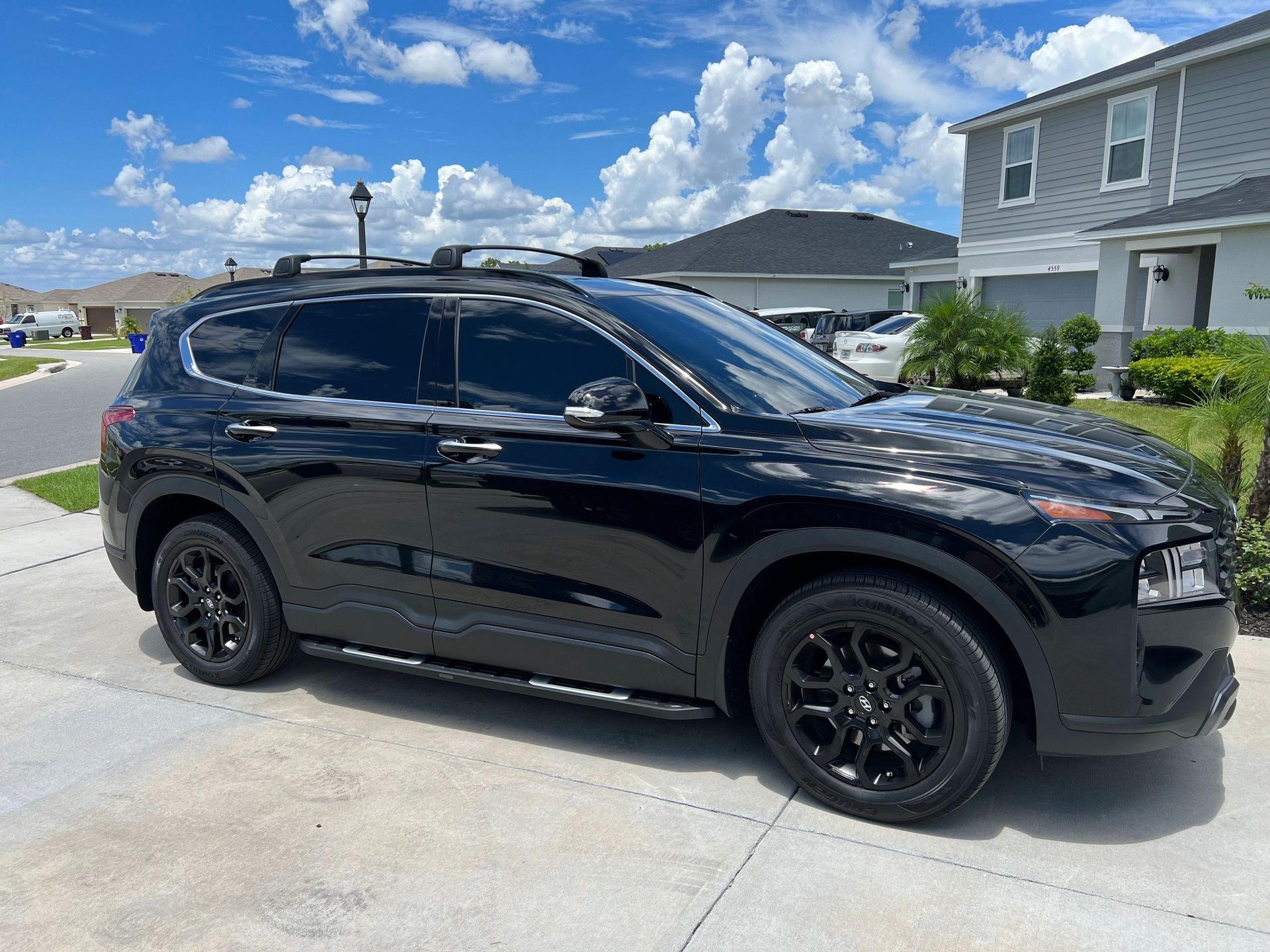
- Slightly darker ceramic on the rear sides and rear glass, as allowed by law, for extra privacy and heat relief.
- A legal windshield strip in ceramic film to help with morning and late afternoon glare.
At a professional shop, we use meters to check VLT and choose films that meet both your comfort goals and Florida’s rules. This helps you avoid tickets and keeps nighttime and storm visibility safe while still cutting a lot of heat.
Choosing the Right Ceramic Window Tint for Your Commute
Not all window tint is the same. Most films fall into three basic groups:
- Dyed film: Mainly changes appearance and reduces some glare, but offers limited heat rejection.
- Metallic film: Better at heat control, but can interfere with signals like GPS, cell, or keyless entry on some vehicles.
- Ceramic film: Designed to reject IR and UV very well without signal issues, with long-lasting color and clarity.
For daily Florida commuting, ceramic window tint is often the best match. To pick the right setup, it helps to walk through a simple process:
Decide your goals:
- Maximum heat relief during long drives or while parked.
- Keeping good visibility at night and in heavy rain.
- A certain style or look, like slightly darker rears for privacy.
- Staying within a set budget while still improving comfort.
Look at film specs:
- Compare ceramic series by their IR rejection and TSER ratings.
- Ask to feel sample boards in the sun to notice the difference on your skin.
- Pay attention to clarity from the inside looking out, not just how it looks from outside.
Match VLT to Florida law:
- Choose legal VLT options for front windows with strong IR rejection.
- Pick appropriate VLT for rear windows based on what is allowed for your vehicle type.
- Think about where you park, how long your commute is, and how sensitive your eyes are to glare.
Quality ceramic film also helps with:
- Less fading and cracking on seats, dashboards, and trim.
- A more comfortable cabin that can help reduce driver fatigue on longer runs.
- Better comfort for passengers, kids, and pets during midday errands.
At Tints and Beyond, we look at your commute pattern, where you park around Cape Coral and nearby areas, and your vehicle type to suggest a ceramic setup that balances heat control, style, and legality.
Stay Cool and Legal with Local Ceramic Tint Expertise
The big takeaway is simple: the real comfort from ceramic window tint comes from high IR rejection and smart film choices, not just from going as dark as possible. With the right ceramic film, many Florida commuters notice a clear drop in cabin temperatures, stronger glare control, and better overall comfort, all while staying within legal VLT limits.
A well-chosen ceramic setup helps your car feel cooler when you first open the door, lets your AC catch up faster, and keeps those daily drives across Southwest Florida more relaxed and less draining. For drivers who are tired of stepping into a hot car every day, ceramic window tint is one of the most practical upgrades you can make.
Get Started With Your Project Today
Transform your home’s comfort and privacy with our premium
ceramic window tint solutions tailored to your space and style. At
Tints and Beyond, we take the time to understand your goals so we can recommend the ideal film for energy efficiency, UV protection, and glare control. If you are ready to discuss options or schedule an on-site estimate, simply
contact us and our team will walk you through every step.