Beat Florida’s Blazing Commutes with Smarter Tint
Daily highway driving in Florida is tough on you and your car. Early-morning glare on I-75, long stretches of bright sun, and afternoon traffic with the sun sitting low in the sky can make every commute feel longer than it really is. The right window tint helps control heat, cut glare, and protect your skin and interior while you sit in that traffic.
For drivers in Cape Coral and across Southwest Florida, tint is not just about style. It changes how hot your cabin feels, how hard your AC has to work, how tired your eyes get, and how your interior looks years from now. The three big choices most drivers consider are dyed, carbon, and ceramic window tint. Each works in a different way, and each gives different results for real-world commuting.
In this guide, we will walk through how Florida heat affects daily drivers, then compare how dyed, carbon, and ceramic window tint perform when you spend lots of time at highway speeds under our intense sun.
How Florida Heat Punishes Daily Highway Drivers
By spring, the sun is already strong in Southwest Florida. Morning and evening commutes both have long periods of direct sun, and the UV index stays high for much of the day. If you spend a lot of time on the highway, that sun is hitting you and your interior through the glass again and again.
Here is what constant sun exposure can do during your daily drive:
- Build serious cabin heat, even with your AC running
- Fade your seats, door panels, and carpets
- Dry and crack dashboards and trim over time
- Expose your skin and eyes to UV rays through the side windows
On the highway, the sun often sits just at the edge of your visor, so it hits your side windows and your face for long stretches. You also get glare bouncing off other vehicles, concrete, and water. That glare can cause squinting and eye strain, especially during longer drives.
High speeds and long distances also mean your tint film has to deal with:
- Constant heat cycling as the glass warms and cools
- Strong sun for long, unbroken periods
- Interior temperatures that rise fast when you park at work or at home
That is why film technology matters. A darker shade alone does not guarantee better performance. What is inside the film makes the real difference in comfort and protection.
Dyed Window Tint Pros and Cons for Commuters
Dyed window tint is the most basic type of film. It uses a dyed layer to absorb some light and cut down brightness. Many drivers like it because it gives a simple, dark look and is usually the most budget-friendly option.
For daily highway use, dyed tint does offer some benefits:
- Reduces basic glare from the sun
- Adds privacy so your interior is less visible
- Gives the vehicle a more finished, uniform look
But for Florida commuters, dyed tint has some real trade-offs. Its heat rejection is limited compared to other films. The cabin can still get very warm on longer drives, which makes your AC work harder. Dyed films often do not block as much UV or infrared heat as higher-end options, so you feel more of that hot, burning sensation on your arms and face.
Over time, our heat and humidity can be hard on dyed films. Common issues include:
- Fading that makes the tint look lighter than when it was first installed
- Color shift that can make it look more purple than neutral
- Bubbling or peeling if the film or installation quality is weak
For short drives or drivers who mainly care about looks, dyed tint might feel fine. For serious daily commuters in Southwest Florida, it often turns into a short-term solution that does not keep up with the climate.
Carbon Window Tint Performance on Florida Highways
Carbon window tint uses carbon particles inside the film to absorb more solar energy than simple dyed films. It typically has a sleek, slightly matte look that many highway drivers like because it reduces reflections on the glass.
Benefits of carbon tint for daily commuting include:
- Better heat rejection than standard dyed film
- Stronger protection from UV rays
- More stable color over time without that faded or purple look
- A cooler cabin during long highway stretches and stop-and-go traffic
With less heat soaking into the cabin, your AC does not have to run at full blast as often. That means a more comfortable ride and less stress on the system during those long I-75 drives.
Carbon tint is a big step up from dyed, but it still has limits compared to ceramic films. It generally does not block as much infrared heat, which is a big part of what makes you feel hot inside the car. Some lower-quality carbon films can also have a slightly hazy appearance or look streaky in certain lighting.
Because of that, the brand and installation quality matter. A well-installed carbon film from a quality source can serve as a strong middle-ground pick for drivers who want better performance without jumping to top-tier ceramic.
Why Ceramic Window Tint Leads in Florida Commutes
Ceramic window tint uses nano-ceramic particles to target solar energy, especially infrared heat, while staying optically clear. This is not just a darker film. It is a smarter film that focuses on the type of heat you feel most when driving.
For Florida commuters, ceramic window tint brings several real-world advantages:
- Noticeably cooler cabin, even on long highway drives
- Strong UV-ray blocking that can damage skin and interiors
- Excellent glare control without needing an overly dark shade
- Clear, crisp visibility day and night that helps reduce eye strain
Because ceramic films are designed to handle infrared heat, the glass and interior surfaces do not get as hot. Your steering wheel, seats, and seat belt buckles are more comfortable when you get back in the car after parking at work or at the store.
Other benefits of quality ceramic tint include:
- Great color stability so it keeps its look over time
- Strong resistance to fading in intense coastal sun
- Durable surface that stands up well to daily use and cleaning
Some ceramic films are also designed to be friendly with GPS, phone, and other signals, which is helpful if you rely on navigation or streaming while you drive.
For those who spend several hours each week behind the wheel, ceramic window tint often feels like the most complete everyday upgrade. It protects comfort, interior surfaces, and long-term driving experience better than other film types.
Head-to-Head: Dyed vs Carbon vs Ceramic for Florida Drivers
When we compare dyed, carbon, and ceramic films for daily highway commuting, a few key points stand out.
Heat rejection and comfort:
- Dyed: Basic performance, cabin still gets very warm on long drives
- Carbon: Noticeably cooler than dyed, better for regular commuting
- Ceramic: Best comfort, designed to target and reduce the most intense heat
UV protection and interior care:
- Dyed: Some UV blocking, but often less than higher-end films
- Carbon: Stronger UV blocking, better long-term interior care
- Ceramic: Highest level of UV protection in most film lines
Glare control:
- Dyed: Cuts brightness, but performance depends heavily on how dark you go
- Carbon: Solid glare control without needing extreme darkness
- Ceramic: Great glare reduction with clearer optics at legal shades
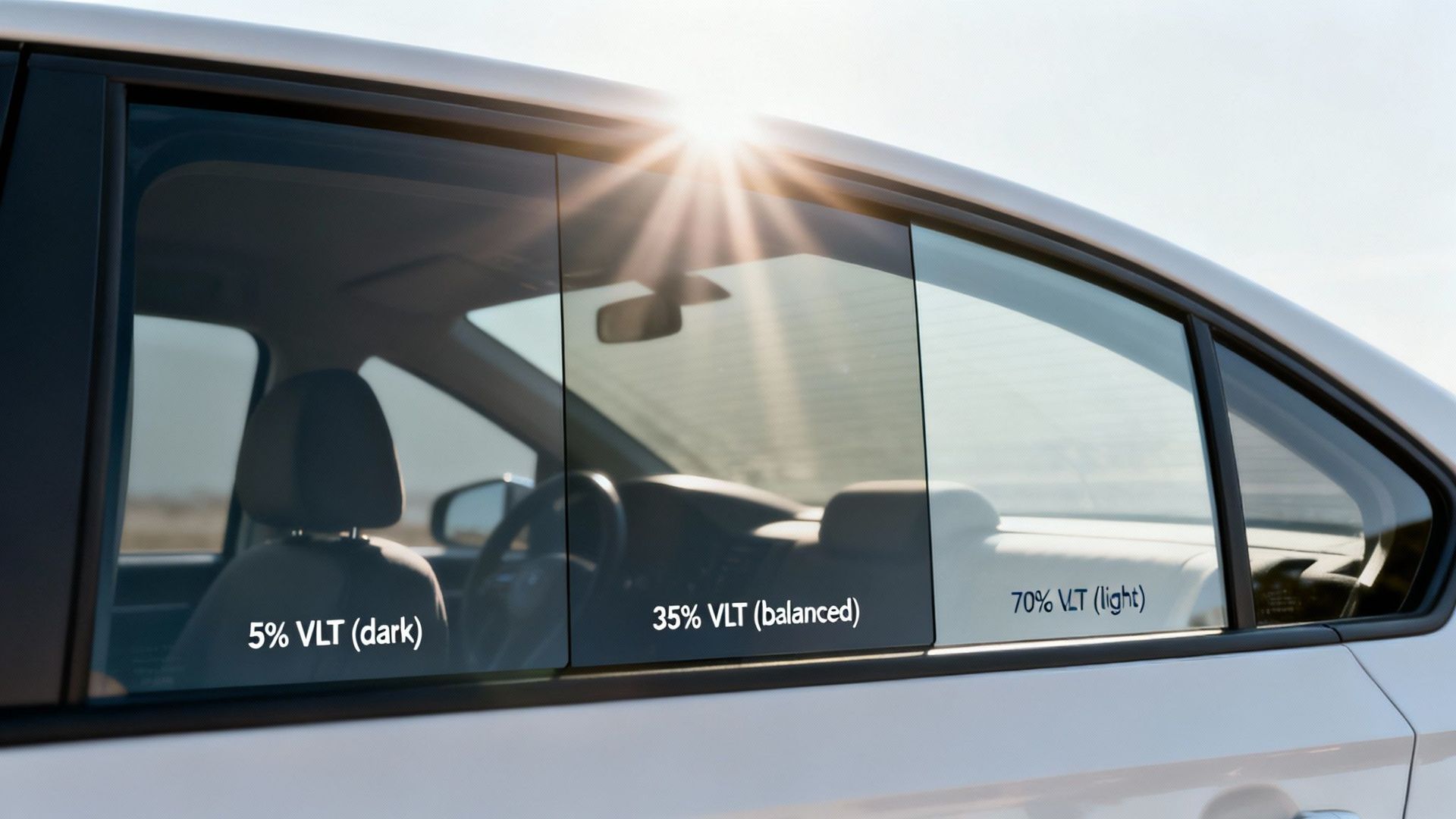
Florida has legal limits on how dark you can tint different windows, and those limits apply no matter which film type you choose. That is where technology really matters. At the same legal shade, ceramic films often feel cooler and more comfortable than dyed or carbon films. You get the benefit of higher performance without having to go too dark.
For daily highway commuters, a simple way to think about the options is:
- Dyed: Best for tight budgets and drivers who mainly want darker glass
- Carbon: Good balance between cost, performance, and appearance
- Ceramic: Best overall pick for comfort, protection, and long-term value in Florida sun
At
Tints and Beyond in
Cape Coral, we see how hard local commutes are on drivers and their vehicles. Choosing the right film type for your daily routes, highway speeds, and parking habits can make every drive feel calmer, cooler, and easier on your eyes and interior.
Get Started With Your Project Today
Upgrade your home’s comfort, privacy, and energy efficiency with our premium
ceramic window tint solutions at
Tints and Beyond. We will walk you through your options, answer your questions, and recommend the best film for your space and budget. Reach out to
contact us today to
schedule a consultation and take the next step toward a cooler, more comfortable home.